


In a world overflowing with stuff, the minimalist living room design stands out like a breath of fresh air. Imagine a space where less truly is more. No cluttered coffee tables or overstuffed sofas—just sleek lines, functional furniture, and a sense of calm that makes you want to kick back with a good book or a cup of herbal tea.
Minimalism isn’t just a trend; it’s a lifestyle choice that invites simplicity and serenity into everyday life. With the right design, a minimalist living room can transform your home into a peaceful retreat. Plus, who wouldn’t want to impress their friends with a space that looks straight out of a design magazine? Dive into the world of minimalist living room design and discover how to create a stylish sanctuary that’s both functional and fabulously uncluttered.
Understanding Minimalist Living Room Design
Minimalist living room design emphasizes simplicity and functionality. This approach fosters a serene atmosphere, carefully selecting essential elements to create a calming environment.
Key Principles of Minimalism
Simplicity defines minimalist design. Focus on a few key pieces to avoid clutter, ensuring each item serves a purpose. Neutral color palettes, such as whites, grays, and beige, create a cohesive look. Natural light plays a crucial role, highlighting space and enhancing tranquility. Incorporating natural materials adds texture, contributing to a warm ambiance.
Benefits of Minimalist Design
Minimalist design reduces stress through a clutter-free environment. Fewer possessions lead to easier maintenance, allowing for more relaxation time. Enhanced functionality results from a focus on essential pieces, promoting better organization. Inviting a soothing aesthetic creates a welcoming atmosphere for guests. Economic benefits include lower costs for furniture and decor, freeing up funds for other priorities.
Essential Elements of Minimalist Living Rooms
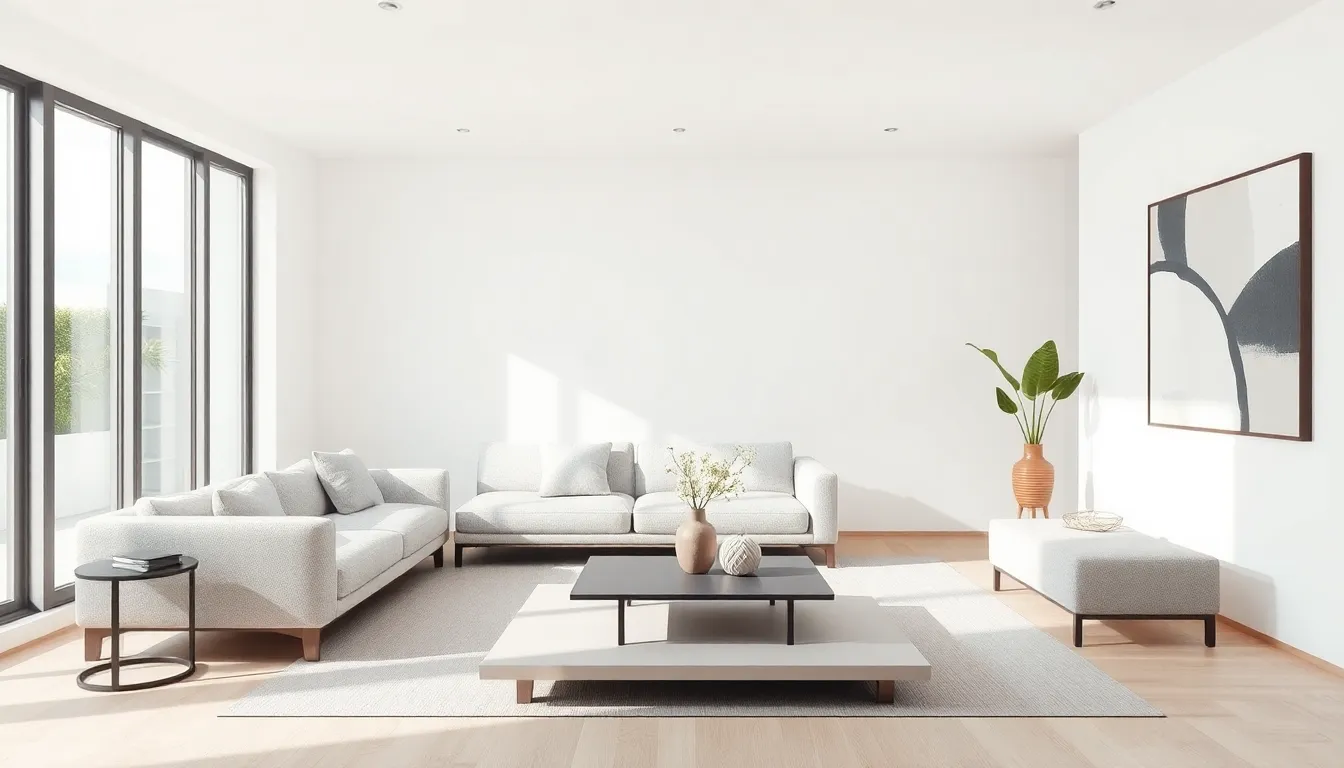
Creating a minimalist living room involves carefully choosing elements that emphasize simplicity and functionality. Focus on essential pieces that contribute to a serene atmosphere.
Furniture Selection
Furniture selection should favor a few intentional pieces. Prioritize multi-functional items, such as sofas with storage or tables that can expand. Shapes in furniture should be clean and geometric to promote visual clarity. Choose quality over quantity, investing in durable materials that resist wear. Modular furniture provides versatility, adapting to changing needs and layouts. Each piece must combine aesthetic appeal with practicality, minimizing distractions while maximizing comfort.
Color Palette
A well-planned color palette enhances minimalism. Neutral tones create a calming effect, incorporating whites, beiges, and soft greys. Accent colors can appear in small details, like throw pillows or artwork. Natural shades reflect light, making smaller spaces feel larger. Maintain balance by choosing similar saturation levels for harmony. Consider the effects of lighting on colors, as different times of day can change their appearance. Each choice in color deepens the peaceful and uncluttered environment.
Creating a Minimalist Living Room
Creating a minimalist living room involves careful consideration of elements that work harmoniously to enhance serenity and functionality.
Layout and Space Planning
Optimal layout and space planning promote a sense of openness. Positioning furniture for easy movement encourages flow and usability. Use fewer, larger pieces to avoid overcrowding while maintaining essential functionality. Arrange seating to foster conversation while keeping sightlines clear. Consider the scale of each piece to create visual balance in the space. Define zones, such as a reading area, using rugs or lighting without compromising openness. Maintain negative space around items to enhance clarity and reduce visual clutter.
Decor and Accessories
Selecting decor and accessories requires intentionality. Choose a few select pieces that speak to personal style while remaining functional. Artwork should be tasteful, featuring simple designs or soothing colors to complement the overall ambiance. Incorporate natural elements, such as plants, to introduce life without overwhelming the design. Limit decorative items to those with significance or dual purposes, like stylish storage boxes. Utilize textiles with subtle patterns to add warmth while keeping the space airy. Prioritizing simplicity in accessories cultivates a calm and inviting atmosphere that reflects minimalist ideals.
Maintaining a Minimalist Living Room
Maintaining a minimalist living room requires continuous effort and intentionality. Effective strategies emphasize organization and thoughtful selection of items.
Decluttering Tips
Prioritize regularly decluttering by setting aside time each month. Identify items that serve no purpose or add unnecessary visual weight. Approach storage solutions strategically, utilizing hidden options like under-sofa compartments or decorative bins. Limit decorative objects to just a few meaningful pieces that enhance the aesthetic. Create a “one-in, one-out” policy by removing an item whenever acquiring a new one. Keep surfaces clear to promote visual serenity. Consider donating or recycling items that no longer fit the minimalist vision, fostering a more spacious environment.
Keeping It Functional and Aesthetic
Focus on selecting furniture that combines function with visual appeal. Incorporate multi-functional pieces like ottomans that store items or coffee tables with integrated shelves. Ensure each item contributes to the overall design theme while maintaining usability. Create a cohesive look by sticking to a neutral color palette that complements minimalist decor. Regularly assess furnishings and decor, ensuring they align with the minimalist ethos. Enhance natural light by using sheer curtains or strategically placing mirrors, making the space feel larger and more inviting. Design should balance functionality and aesthetic to maintain a pleasant and serene living atmosphere.
Embracing minimalist living room design offers a pathway to a more serene and organized home. By focusing on essential elements and prioritizing functionality over excess, individuals can create inviting spaces that reflect their personal style while promoting tranquility.
The intentional selection of furniture and decor enhances the overall aesthetic without overwhelming the senses. Regular maintenance and mindful decluttering ensure that the minimalist ethos remains intact. Ultimately, a well-executed minimalist living room not only elevates the home’s appearance but also fosters a peaceful retreat from the chaos of everyday life.


