

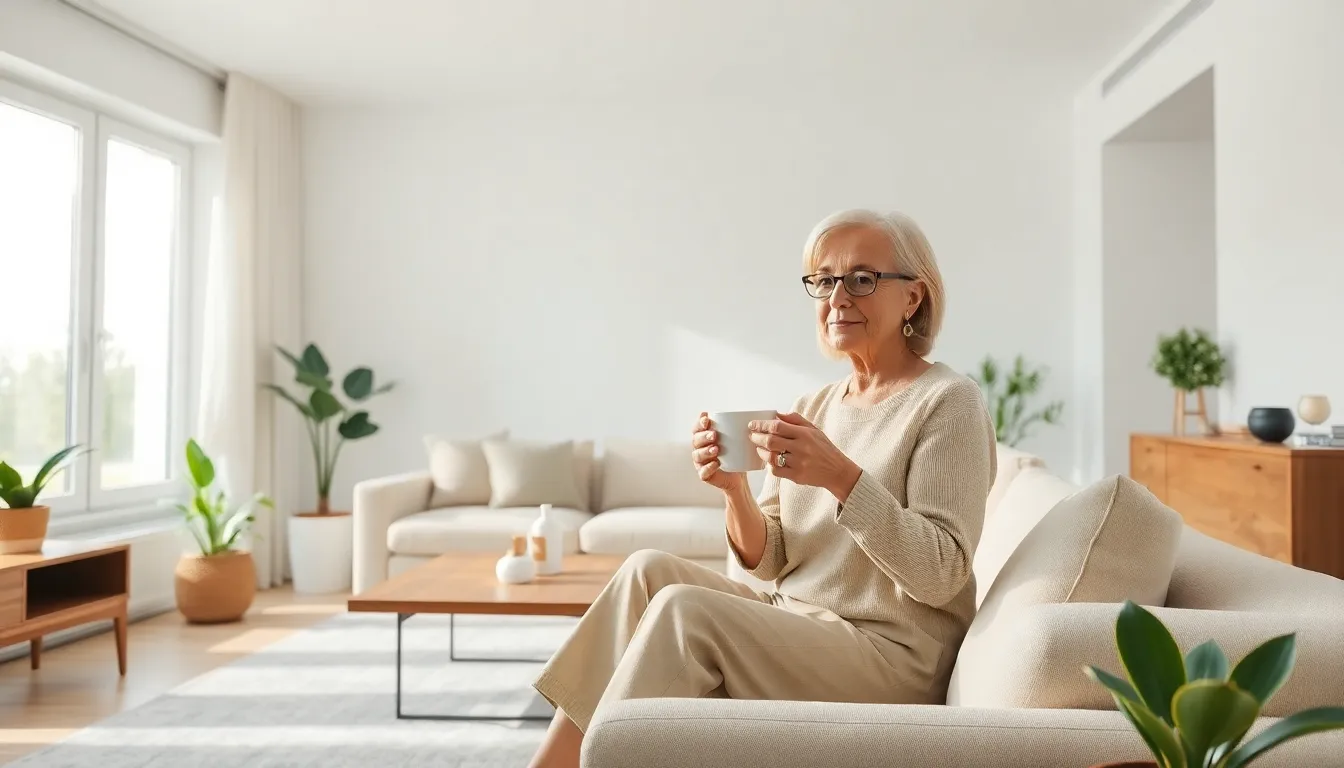
Imagine stepping into a living room that whispers tranquility instead of shouting chaos. Minimalist decor isn’t just a trend; it’s a lifestyle choice that transforms cluttered spaces into serene sanctuaries. With clean lines and a focus on the essentials, this design philosophy invites calmness and clarity into everyday life.
Understanding Minimalist Decor Living Room
Minimalist decor emphasizes simplicity and functionality in living rooms, creating spaces that promote peace and clarity. By stripping away excess, the design focuses on essential elements that enhance the overall aesthetic.
Key Principles of Minimalism
Clean lines form the foundation of minimalist decor. Functionality plays a crucial role, as every piece serves a purpose. Neutral color palettes bring a sense of calm, allowing natural materials to shine. Natural light enhances the openness of the space, making it feel more expansive. Fewer decorative items lead to a less cluttered environment, fostering tranquility. Overall, minimalist spaces encourage thoughtful arrangement, prioritizing harmony and simplicity.
Benefits of Minimalist Decor
Minimalist decor significantly reduces stress levels by eliminating visual clutter. It promotes efficient use of space, making smaller rooms feel larger and more inviting. Ease of maintenance arises from fewer items, simplifying cleaning routines. Reduced costs occur from purchasing fewer furnishings and focusing on high-quality pieces. Environmental impact lessens with a commitment to sustainability, as there’s often an emphasis on eco-friendly materials. Overall, embracing minimalism creates a serene atmosphere that supports both mental and emotional well-being.
Essential Elements of Minimalist Decor Living Room
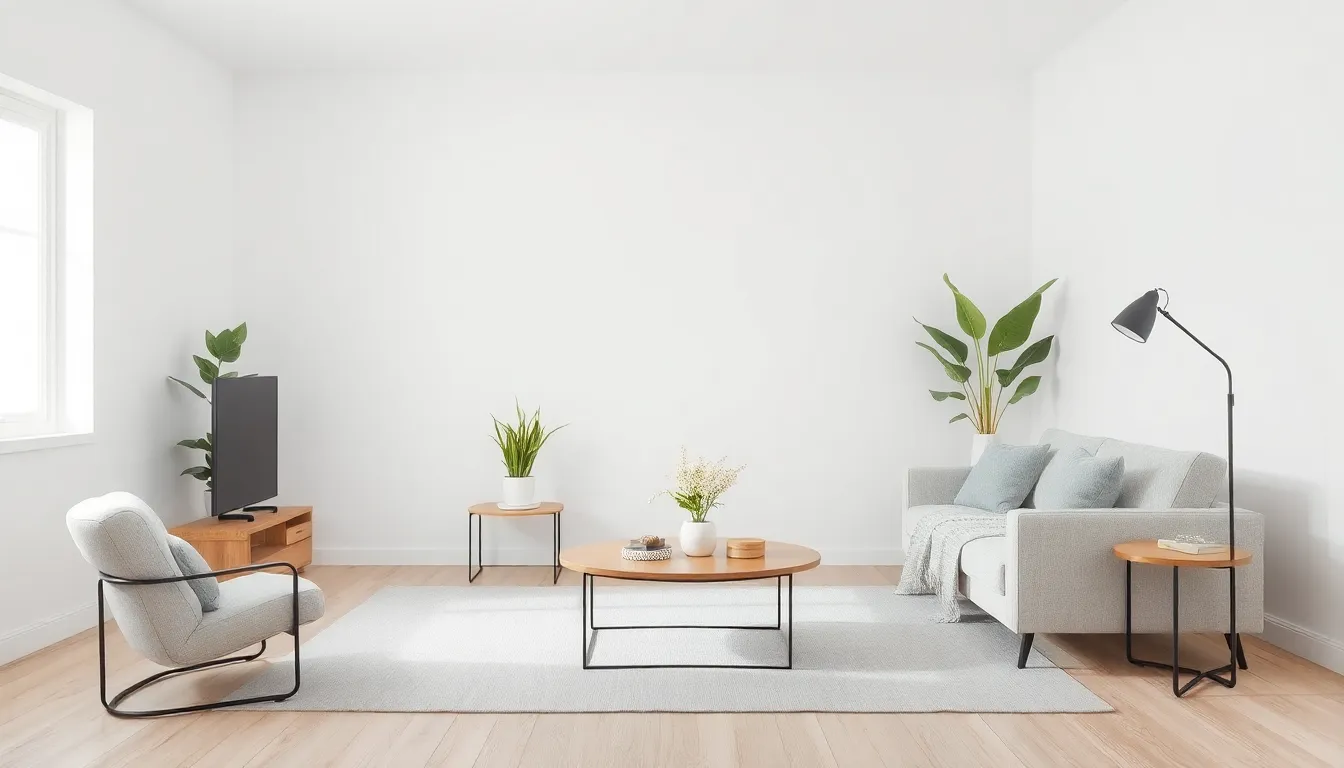
Embracing minimalist decor in the living room involves strategic choices that promote simplicity and functionality. Key aspects to consider include color palette, furniture selection, and textures and materials.
Color Palette
Neutral colors, like white, beige, and gray, form the foundation of a minimalist living room. A restrained color scheme encourages a sense of calm and spaciousness. Accents, such as muted pastels or earth tones, can subtly enhance the atmosphere without overwhelming it. Consistency in color creates harmony, making the space feel cohesive. Additionally, lighter shades reflect natural light, further elevating the serene vibe.
Furniture Selection
Purposeful furniture plays a vital role in minimalist design. Pieces should serve multiple functions, like a coffee table doubling as storage. Opting for simple shapes contributes to clean lines, while avoiding overly ornate designs maintains focus on essential elements. Selecting high-quality materials ensures durability and enhances the visual appeal. Minimalist living rooms emphasize space, so avoid overcrowding with unnecessary items.
Textures and Materials
Incorporating varied textures enriches a minimalist decor without complicating the aesthetic. Natural materials, such as wood, stone, and metal, enhance the organic feel of the space. Soft textiles, like linen or cotton, balance harder surfaces, adding warmth and comfort. Aim for a mix that complements the overall design while maintaining a serene atmosphere. Integrating plants introduces a refreshing natural element that enhances the connection to nature.
Tips for Creating a Minimalist Decor Living Room
Creating a minimalist decor living room involves thoughtful choices that enhance simplicity and peace. The following tips offer practical steps to achieve this calming aesthetic.
Decluttering Your Space
Start by removing unnecessary items. Clear surfaces like tables and shelves, leaving only essential decor. Identify duplicates such as vases or books and reduce them to one or two favorite pieces. Assess furniture pieces; consider their purpose and keep only what serves a function. Explore creative storage solutions that hide clutter while maintaining easy access to essentials. Regular maintenance aids in sustaining a minimalist environment, making decluttering a routine rather than a chore.
Choosing Functional Decor
Opt for multifunctional furniture to maximize space. Invest in items that serve dual purposes, like a coffee table that also offers storage. Select pieces with clean lines and a neutral palette that complements the overall design. Minimalist art, such as abstract prints, adds beauty without overwhelming the space. Prioritize quality over quantity, focusing on a few statement pieces rather than numerous small items. The right decor enhances utility without sacrificing aesthetics, creating a balanced look.
Incorporating Nature
Integrate natural elements for warmth and vitality. Choose plants that thrive indoors, such as snake plants or succulents, to breathe life into the room. Incorporate natural materials like wood and stone for textures that feel organic. Utilize large windows to invite ample sunlight, which promotes growth and uplifts mood. Display these elements thoughtfully, maintaining a serene balance that highlights the beauty of nature. A connection to the outdoors fosters tranquility, supporting the minimalist ethos.
Popular Minimalist Decor Styles
Several popular styles embody minimalist decor. Each style offers unique features that enhance tranquility and simplicity in living rooms.
Scandinavian Minimalism
Scandinavian minimalism emphasizes functionality and warmth. Light colors, like whites and pale pastels, create an inviting atmosphere. Natural materials, such as wood and wool, contribute a sense of comfort. Clean lines characterize furniture, ensuring spaciousness. Additionally, large windows maximize natural light, enhancing the serene vibe. This style often includes simple, well-designed accessories, focusing on purpose rather than clutter.
Japanese Minimalism
Japanese minimalism prioritizes simplicity and nature. Neutral color palettes, complemented by natural elements, promote a peaceful environment. Shoji screens, tatami mats, and low furniture create a harmonious balance between space and design. Zen principles guide the aesthetic, encouraging mindful living. Incorporating indoor plants brings a touch of nature inside, enhancing serenity. Overall, this style fosters a calm, uncluttered space that aligns with minimalist ideals.
Embracing minimalist decor in the living room not only elevates the aesthetic but also fosters a sense of peace and clarity. By prioritizing simplicity and functionality, individuals can create a serene environment that enhances their daily lives. The thoughtful selection of neutral colors, purposeful furnishings, and natural elements contributes to a tranquil atmosphere that promotes well-being.
As one adopts this design philosophy, they’ll discover the benefits of reduced stress and increased mindfulness. Minimalism isn’t just a style; it’s a lifestyle choice that encourages individuals to focus on what truly matters. With each carefully curated piece, a minimalist living room becomes a sanctuary of calm, inviting reflection and relaxation.


