


Imagine stepping into a living room that feels like a cozy hug, where every piece of furniture whispers tranquility. A warm minimalist living room isn’t just a trend; it’s a lifestyle choice that transforms chaos into calm. With clean lines and a soothing color palette, this design approach invites relaxation while keeping the clutter at bay—because who needs a mountain of throw pillows when you can have a serene space that actually sparks joy?
In a world where maximalism often reigns, embracing warmth and simplicity can feel revolutionary. Picture soft textures mingling with natural elements, creating an inviting atmosphere that welcomes you home. Whether you’re a design novice or a seasoned pro, crafting a warm minimalist living room is easier than you think. Get ready to discover how to create a space that not only looks good but feels even better.
Understanding Warm Minimalism
Warm minimalism encapsulates a design approach that combines simplicity with a soothing aesthetic. This style creates an inviting atmosphere while maintaining functionality.
Definition of Warm Minimalism
Warm minimalism emphasizes clean lines and organic shapes, integrating elements that foster a sense of comfort. Lighter color palettes contribute to an airy feel. Wood accents, muted textiles, and personal touches enhance warmth. This approach contrasts stark minimalism, showcasing a curated selection of items. By balancing essential decor with inviting features, warm minimalism evokes tranquility in living spaces.
Key Principles of Minimalist Design
Minimalist design thrives on the ethos of “less is more.” Intentional space serves as a key component. Every object must serve a purpose, eliminating visual clutter. Neutral colors lay the groundwork for a serene environment. Natural materials bring texture and warmth into the space, creating harmony with the surroundings. Functional furniture pieces prioritize comfort and practicality while maintaining aesthetic appeal. By focusing on these principles, one achieves a minimalist yet inviting living room atmosphere.
Creating a Warm Minimalist Living Room
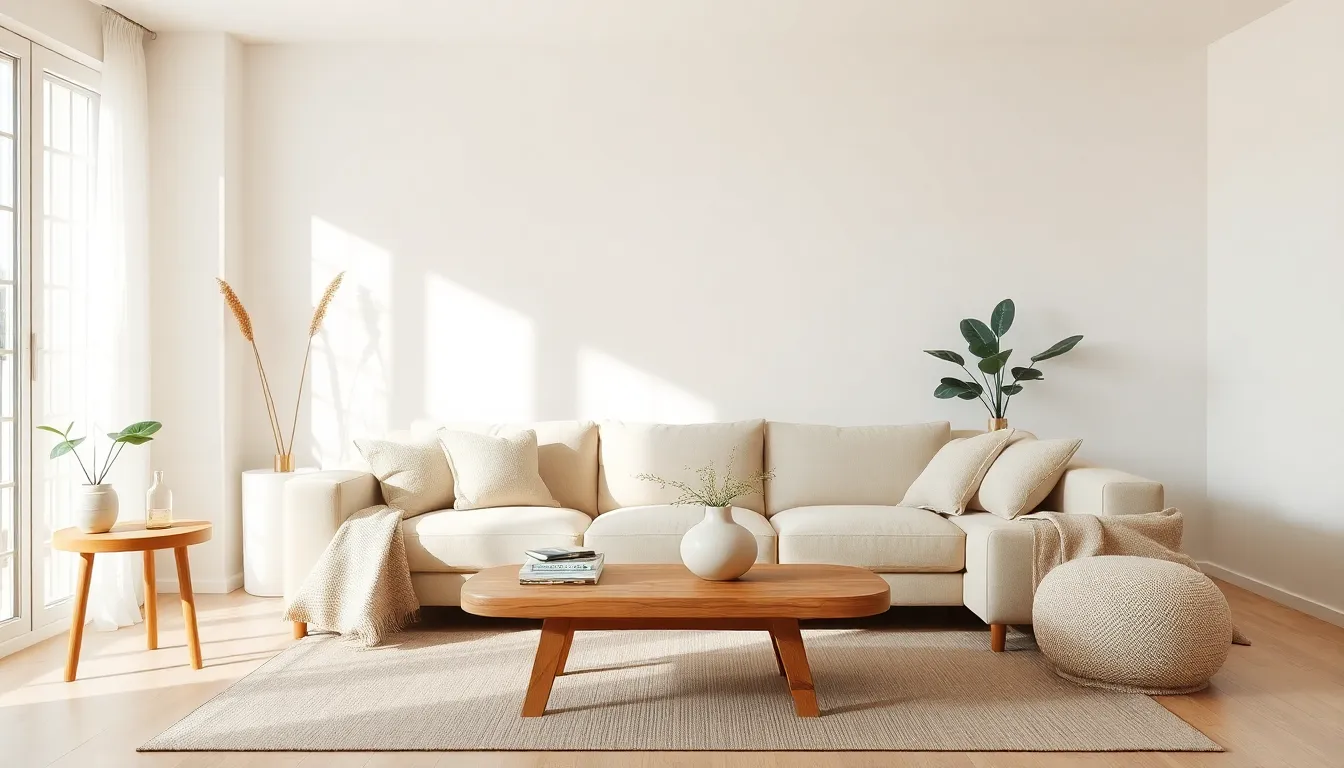
A warm minimalist living room embodies tranquility and simplicity. Focusing on essential elements helps create a balanced space that feels inviting.
Choosing a Color Palette
Selecting a soft color palette sets the foundation for warmth. Neutral tones such as beige, taupe, and soft whites promote serenity. Integrating muted colors, like gentle greens and blues, enhances a calming vibe. Add depth by incorporating warm wood tones for contrast. Using these shades throughout the room creates cohesion while minimizing visual clutter. A well-chosen palette forms an essential backdrop that radiates comfort.
Selecting Furniture and Decor
Opting for functional furniture boosts the minimalist aesthetic. Prioritize pieces with clean lines and organic shapes for an airy feel. Consider using natural materials such as wood or rattan for warmth. Incorporate textiles like soft throws and cushions to add texture. Personal decor items, such as a unique vase or carefully selected art, contribute character without overwhelming the space. Neutral-toned furniture ensures that each piece complements the overall design while maintaining a sense of harmony.
Textures and Materials
In a warm minimalist living room, textures and materials play a vital role in creating an inviting atmosphere. Choosing the right components adds depth and enhances the overall aesthetic.
Incorporating Natural Elements
Natural elements enrich the space with warmth and authenticity. Wood, stone, and plants contribute organic beauty. For instance, hardwood floors provide a solid base while adding natural charm. Simple wooden furniture pieces, such as a coffee table or shelving, lend a rustic touch. Adding greenery through potted plants brings life and vibrancy to the environment. Textured fabrics, like linen cushions or cotton throws, complement these features by softening the overall look. Each natural element serves to create a cohesive design, reinforcing the calming ethos of warm minimalism.
Balancing Soft and Hard Textures
Balancing soft and hard textures creates a dynamic living room. Plush sofas invite relaxation with their comfortable appeal, while sleek metal or glass accents bring sophistication. For example, pairing a soft wool rug with a minimalist metal coffee table enhances visual interest. Introducing a variety of materials bridges comfort and style effectively. Natural fabrics in curtains can soften hard surfaces, making the space feel approachable. Layering textures prevents monotony while maintaining a clean aesthetic. Each choice contributes to an environment that feels both soothing and refined.
Lighting Considerations
Lighting plays a crucial role in shaping the ambiance of a warm minimalist living room. Thoughtful selection between natural and artificial light sources enhances serenity and comfort in the space.
Natural Light vs. Artificial Light
Natural light brings vibrancy and warmth to a living room. It creates an inviting atmosphere while highlighting the beauty of design elements. Strategically placed windows or skylights optimize sunlight, filling the space with a calming glow throughout the day. Artificial light complements this effect during evenings and cloudy days. Using warm-toned bulbs in fixtures fosters a cozy feel that aligns with minimalist aesthetics.
Types of Lighting for a Cozy Atmosphere
Layering various lighting types is essential for achieving coziness. Ambient lighting establishes overall brightness, while task lighting serves functional needs. Incorporating floor lamps or table lamps with soft shades creates intimate pockets of light, enhancing comfort. Accent lighting highlights specific decor items, adding warmth and interest. Dimmable fixtures allow for adjustable brightness, promoting relaxation during evening hours. Integrating these lighting types ensures a balanced and inviting environment.
Accessorizing Your Space
Accessorizing a warm minimalist living room adds personality without overcrowding. Choose items that enhance comfort and complement the serene atmosphere.
Essential Accessories for a Warm Feel
Blankets, cushions, and throws foster a cozy vibe. Select soft textiles in muted tones to maintain harmony. Decorative elements like ceramics or artisan pieces can add subtle character. Plants serve as living decor, bringing nature indoors and enhancing warmth. Handcrafted items, such as woven baskets, create texture while offering functionality. Natural elements like wood accents invite a sense of authenticity. Soft lighting, such as table lamps or candles, adds a welcoming glow.
Tips for Layering Decor
Layering decor creates depth and visual interest. Start with a neutral base—walls and furniture in soft tones. Add decorative objects of varying heights to create balance. Incorporate varying textures through textiles and materials; mix soft fabrics with sleek surfaces. Use a large area rug to anchor seating arrangements and provide warmth underfoot. Consider the focal point of the room, ensuring accessories highlight this area without distraction. Balancing open spaces enhances flow and maintains a clean, minimalist aesthetic.
Creating a warm minimalist living room is about more than just aesthetics; it’s a lifestyle that promotes peace and comfort. By focusing on clean lines and a soothing color palette, anyone can transform their space into a serene retreat. Incorporating natural materials and soft textures adds warmth while maintaining a minimalist vibe.
Thoughtfully chosen decor pieces can reflect personal style without overwhelming the space. The right lighting further enhances the inviting atmosphere, ensuring that the room feels cozy and welcoming at all times. Embracing these principles allows for a harmonious living environment that balances simplicity with emotional comfort, making it a perfect sanctuary for relaxation and connection.


